This post is also available in:
 Français
I’ve been wanting to create this tote bag for a long time. So long that the first sketches must date back to a year and a half ago, and the leathers were purchased last year. What had been holding me back until now were the tubular handles. I’ve never made any before and the idea of making them scared me a little.
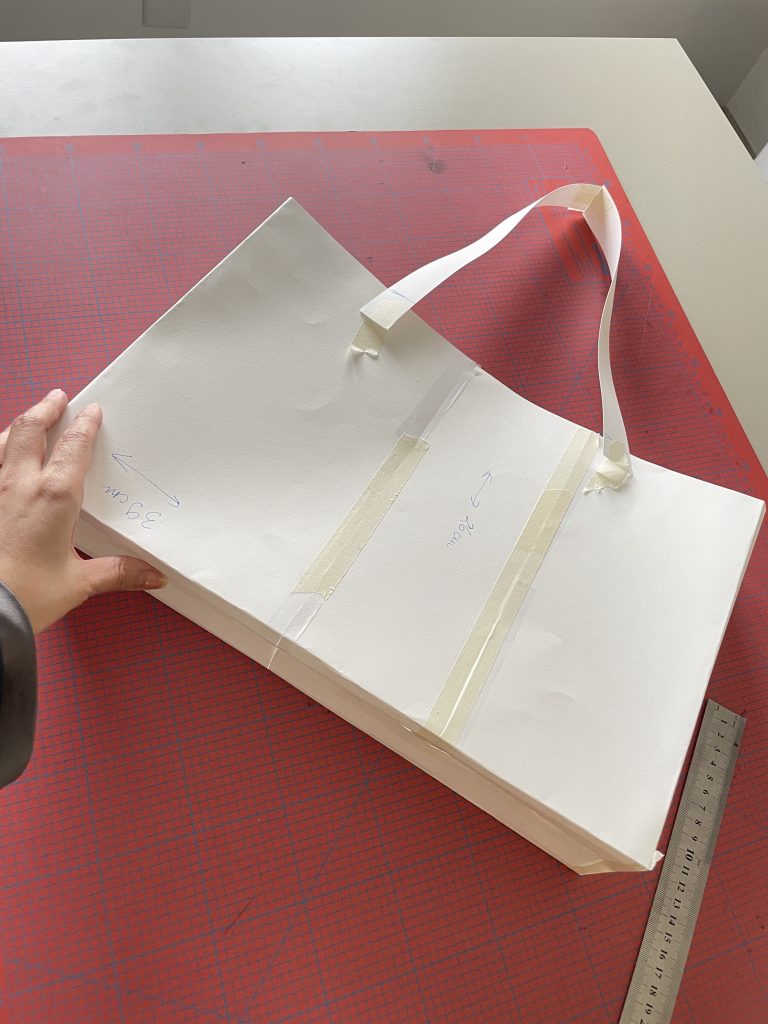
However, with an imminent move, I set myself a deadline and within two weeks, the tote bag finally came to life. I must have spent 35 hours on it but it was totally worth it. I made two paper prototypes for this bag to get an idea of the dimensions I wanted. The ideal is to be able to slip in a large, heavy book, the kind I usually bring back from the library. But I’d also like to use it as a shopping bag. However, I don’t want my groceries mixing with my wallet, my AirPods, etc., so dedicated storage spaces are a must.
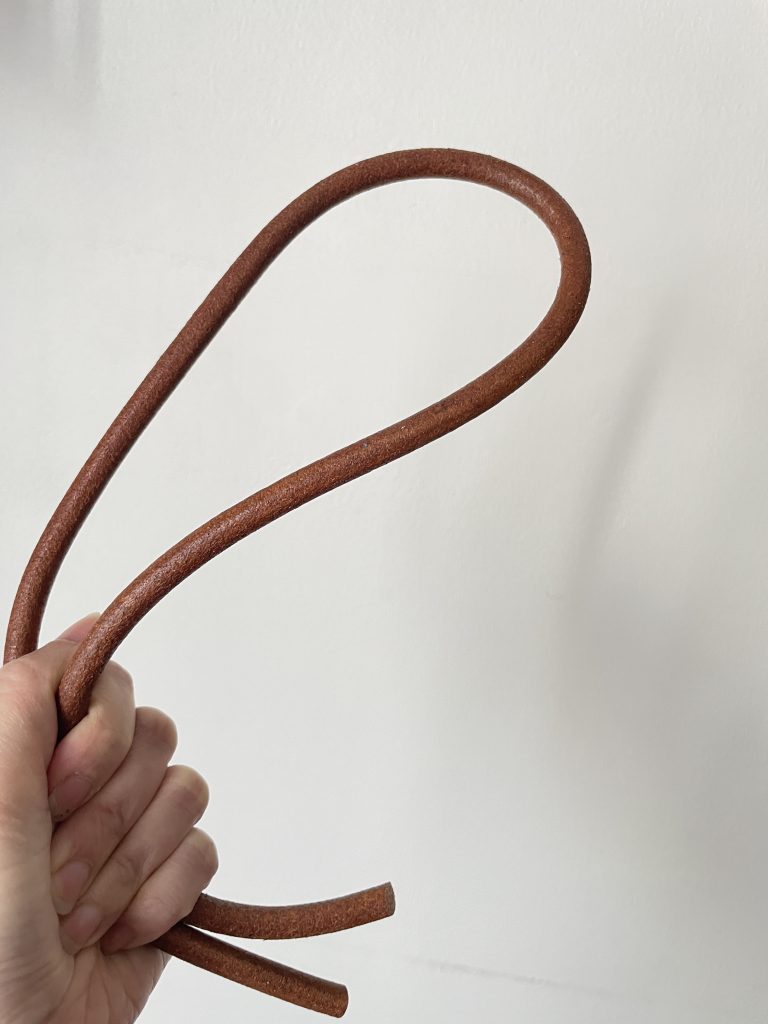
I started with the hardest task: the tubular handles. I used a leather cord and had to ask JB for help to stretch and glue it to the leather properly. It was the step I dreaded the most, but in the end it was less difficult than I had thought.
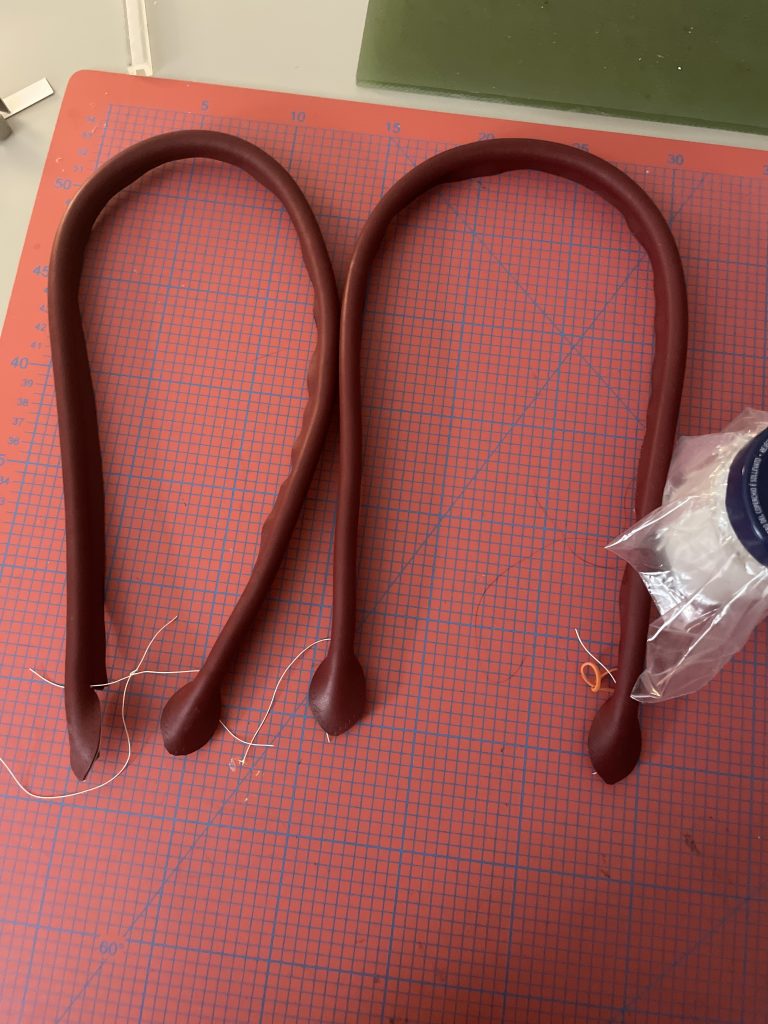
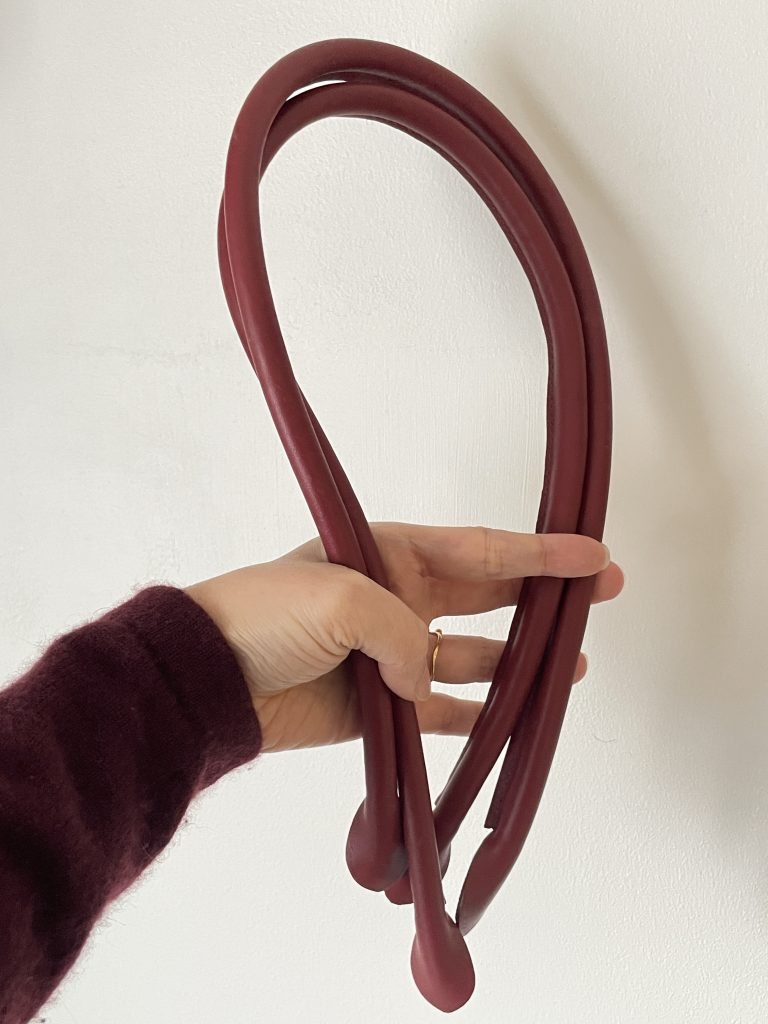
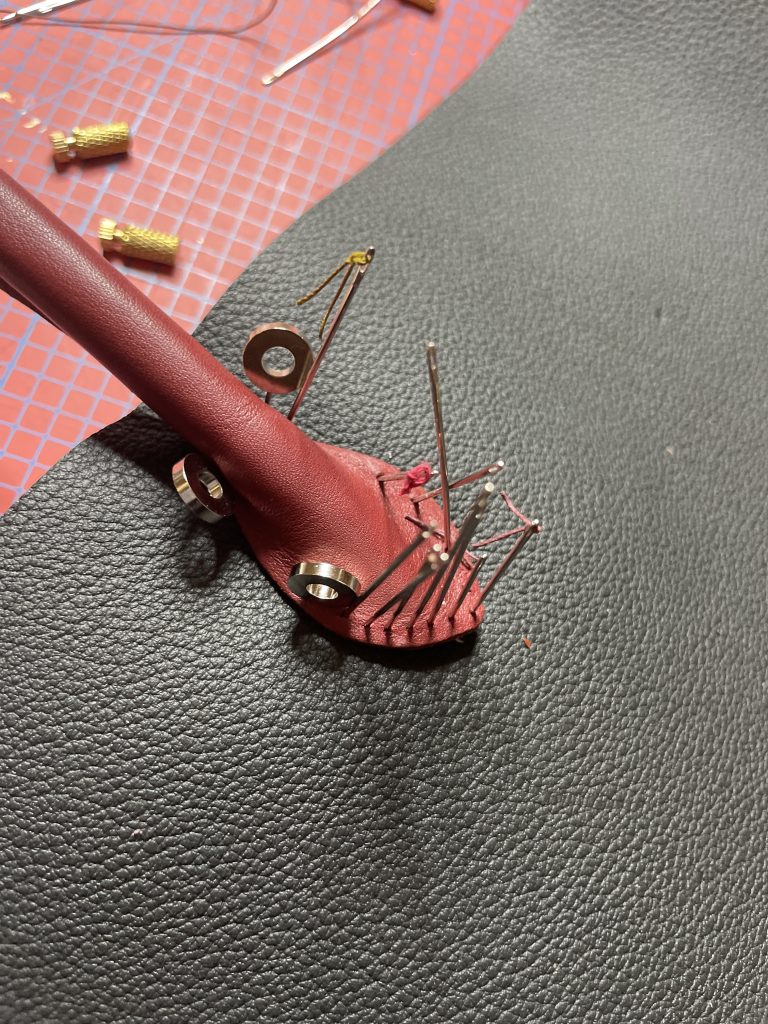
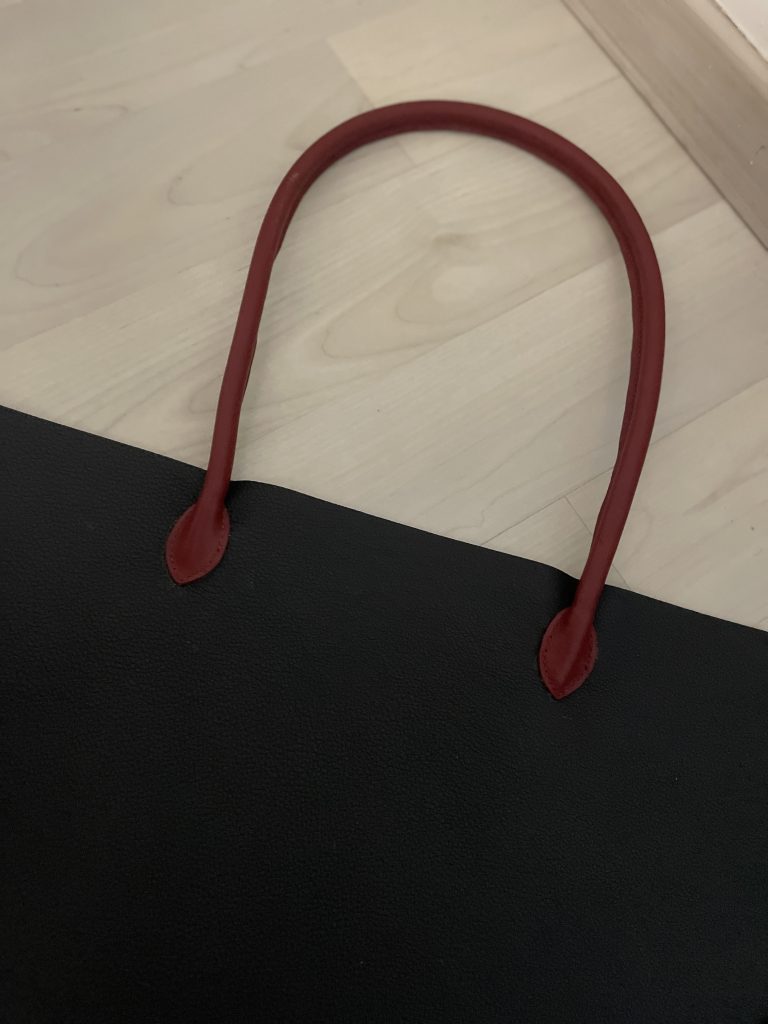
It was while finishing the handles that I realized they might be too small and would struggle to support the weight of the bag. I had to rethink the lining reinforcements and the bag’s design to give these handles maximum durability. I tell myself that at worst, if the handles tear after a few years, I can always ask a more experienced craftsman to make me new, wider ones.
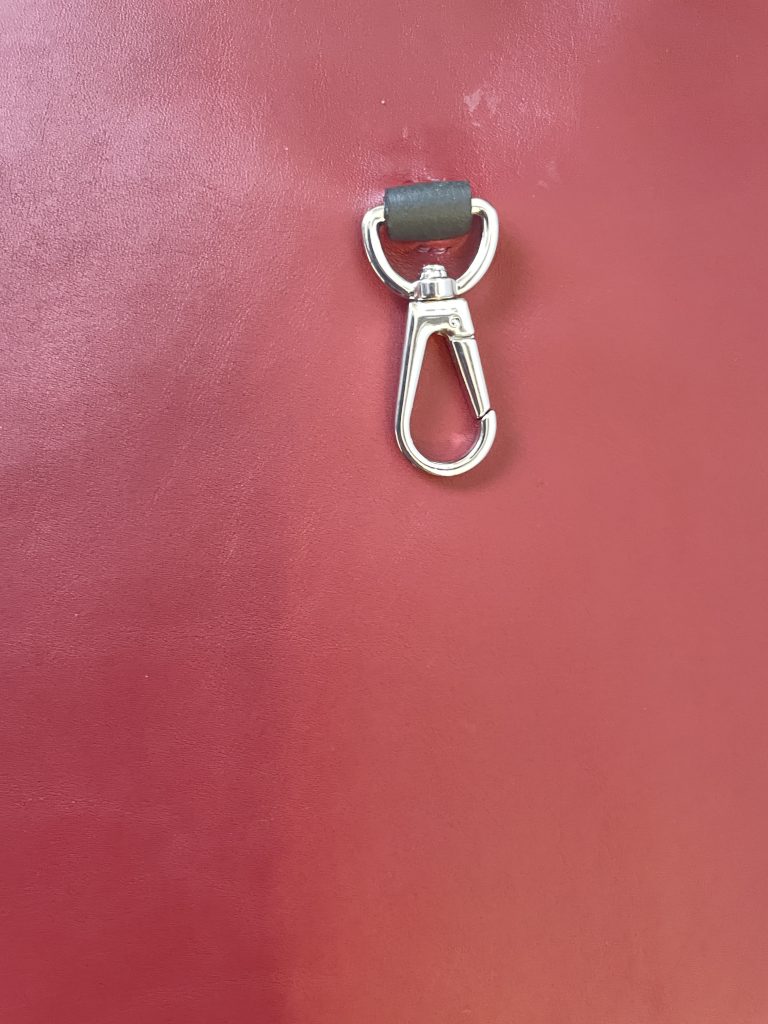
It was while testing the weight of the lining and the outer leather that the lining design changed again. Indeed, without the interior pockets, the bag is already heavy, so it’s better to simplify the inner details. I went with a double pocket, a key hook, and an AirTag holder. It still took me several hours to make sure everything was properly centered and reinforced on the back.
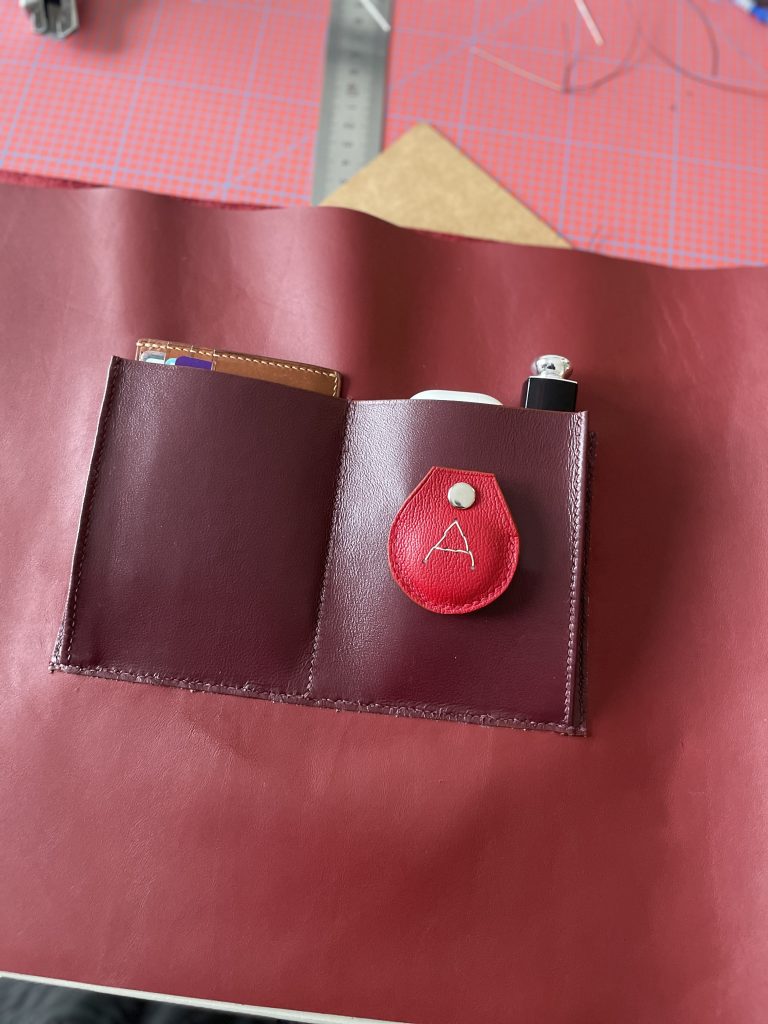
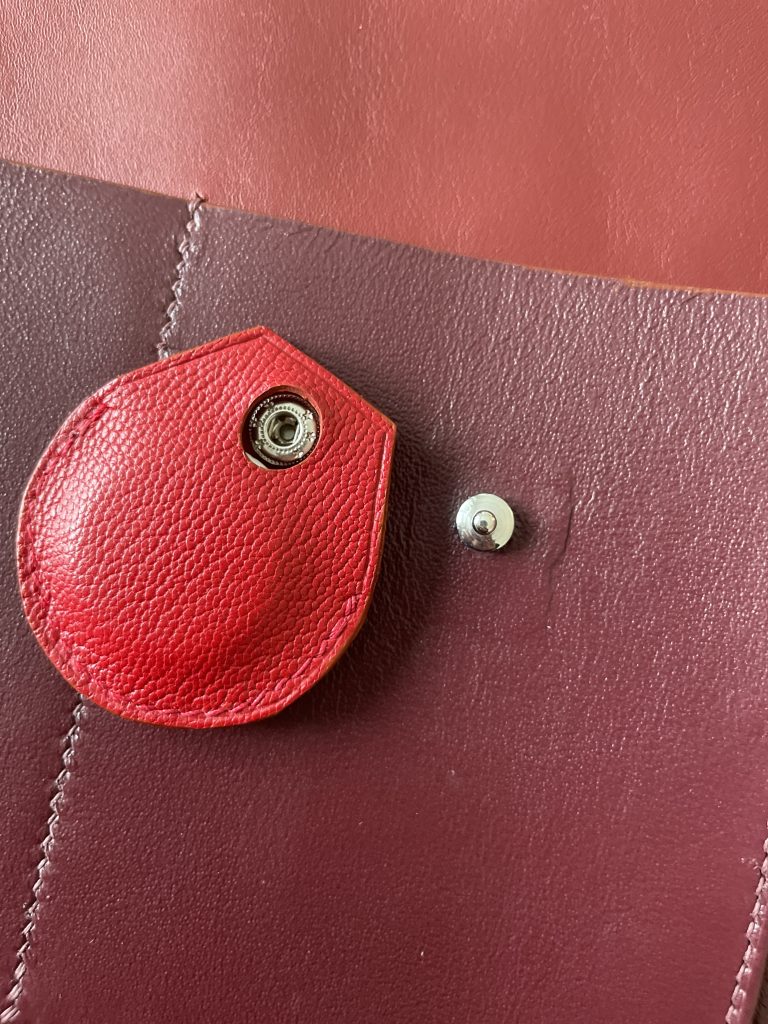
Sewing the bottom and one side of the bag was horribly painful on my fingers and back. I usually enjoy sewing a lot, but working under pressure (deadline) and through such thick and difficult layers unfortunately brought me no joy.
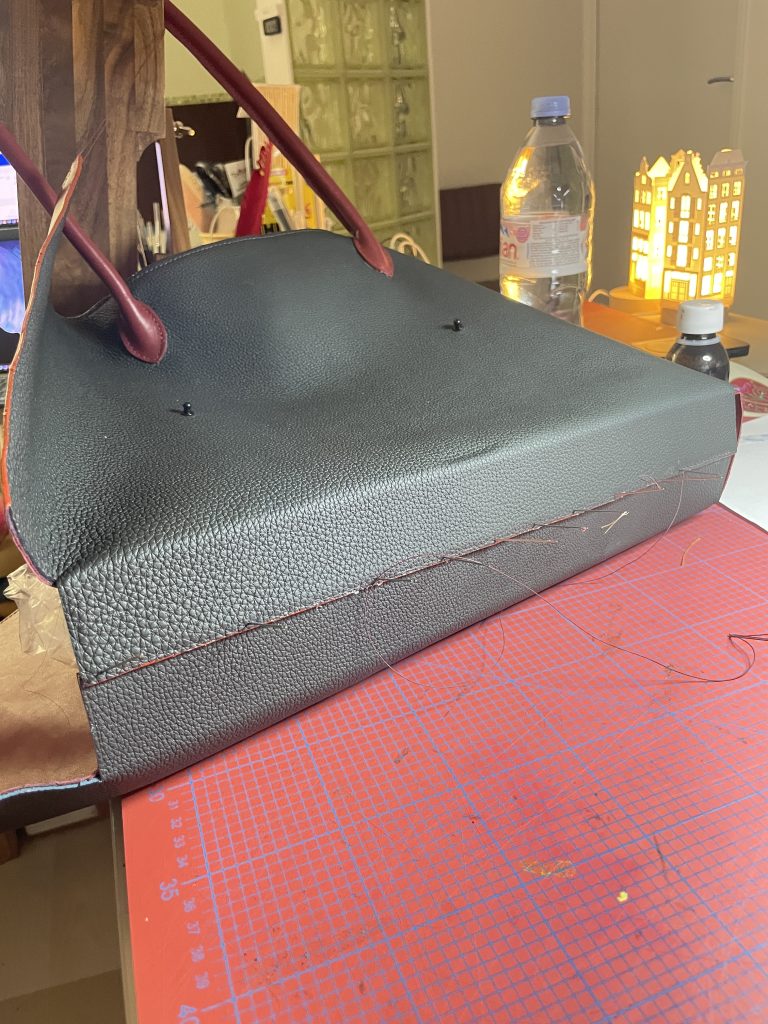
Afterwards, with still-sore fingers, I finished sewing the small details: the little pouch attached via two hidden rivets & two magnetic strips to quickly close the tote bag. I’m very proud of the little pouch because the system is very flexible: when I’m not travelling, I attach a small pouch that can hold my smartphone (and is easy to access). And when I travel, the two rivets support a leather strap that will allow me to attach the tote bag to a suitcase handle.
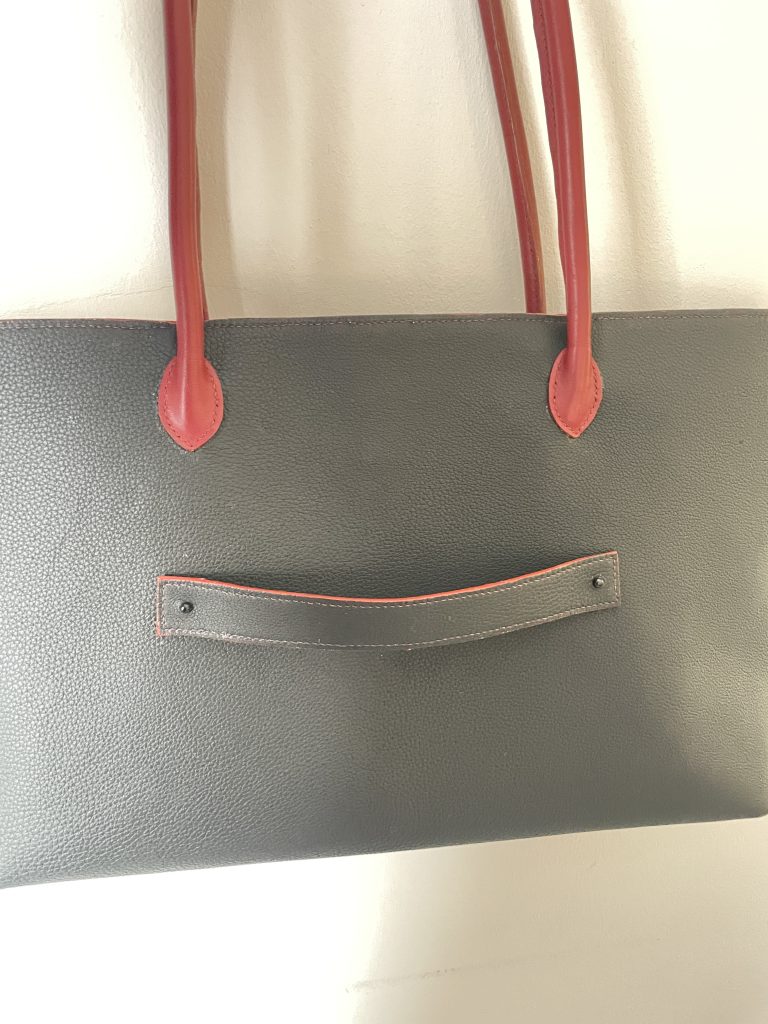
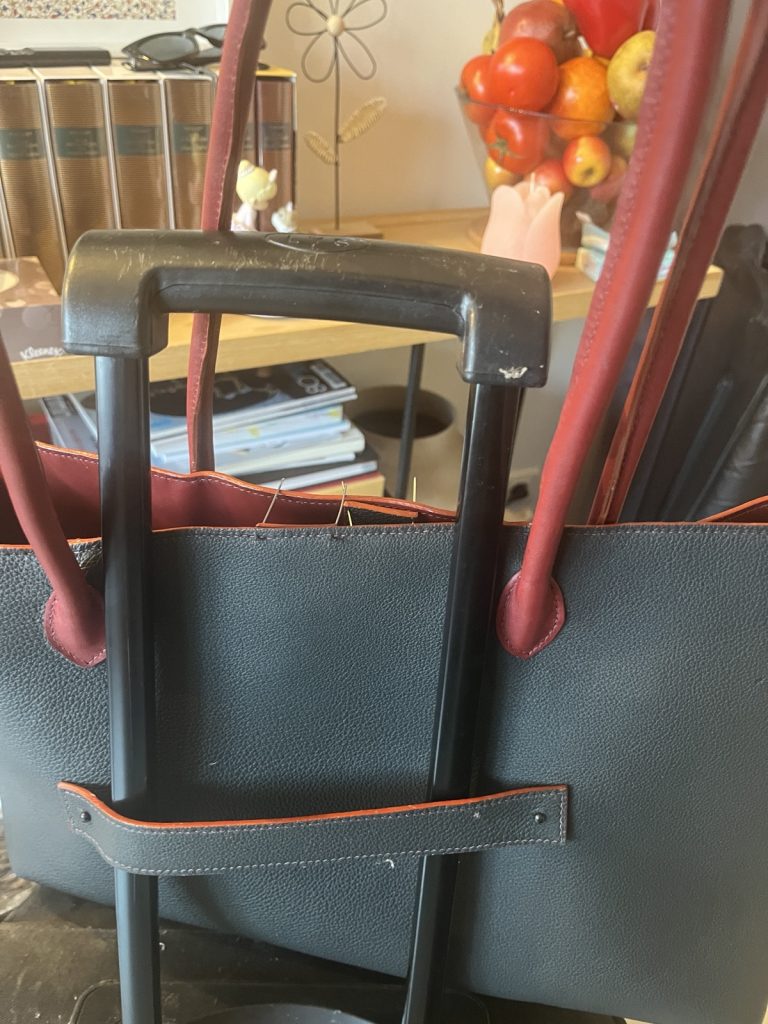
Admittedly, I’ll use this strap for a maximum of 30 minutes per trip, but when I used to travel without access to this feature, it bothered me every single time. So I wanted a system that would let me do it without being a burden in daily life (i.e. when I’m not travelling, I don’t have to carry that extra piece around permanently), hence the idea of the removable pouch & removable extra piece. Since the rivet system isn’t necessarily the most secure for a pouch of that size, it is also attached for safety to one of the handles. That way, the pouch can be stored inside or outside the tote bag and is at no risk of being stolen (as that’s where I plan to keep my smartphone).
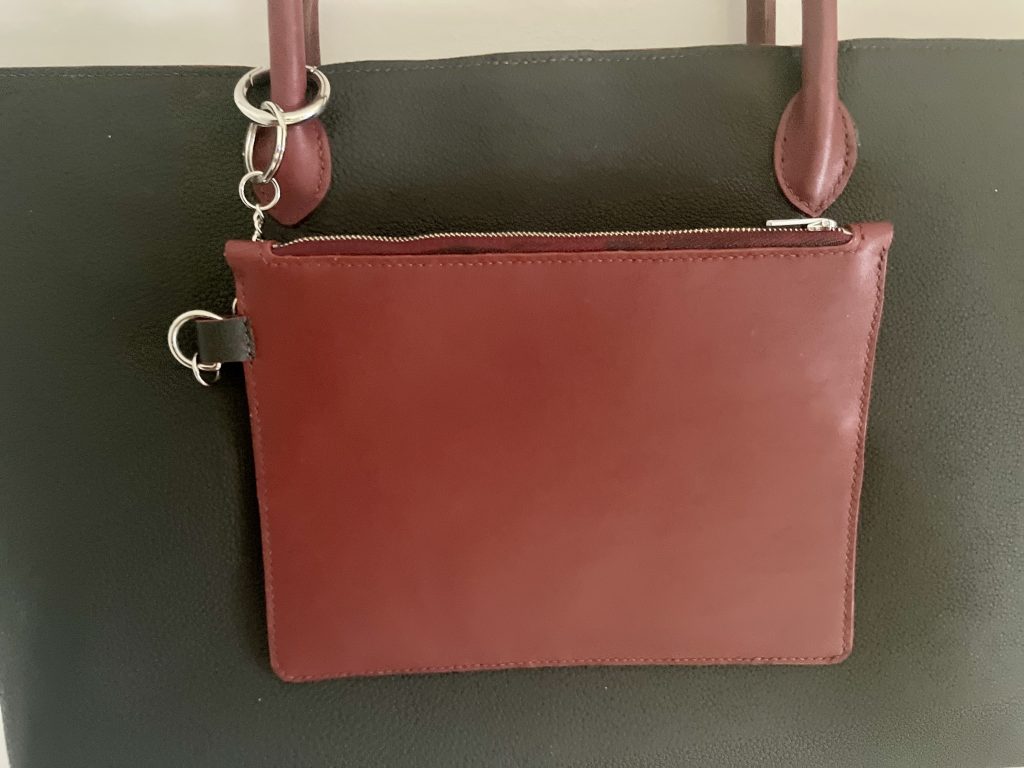
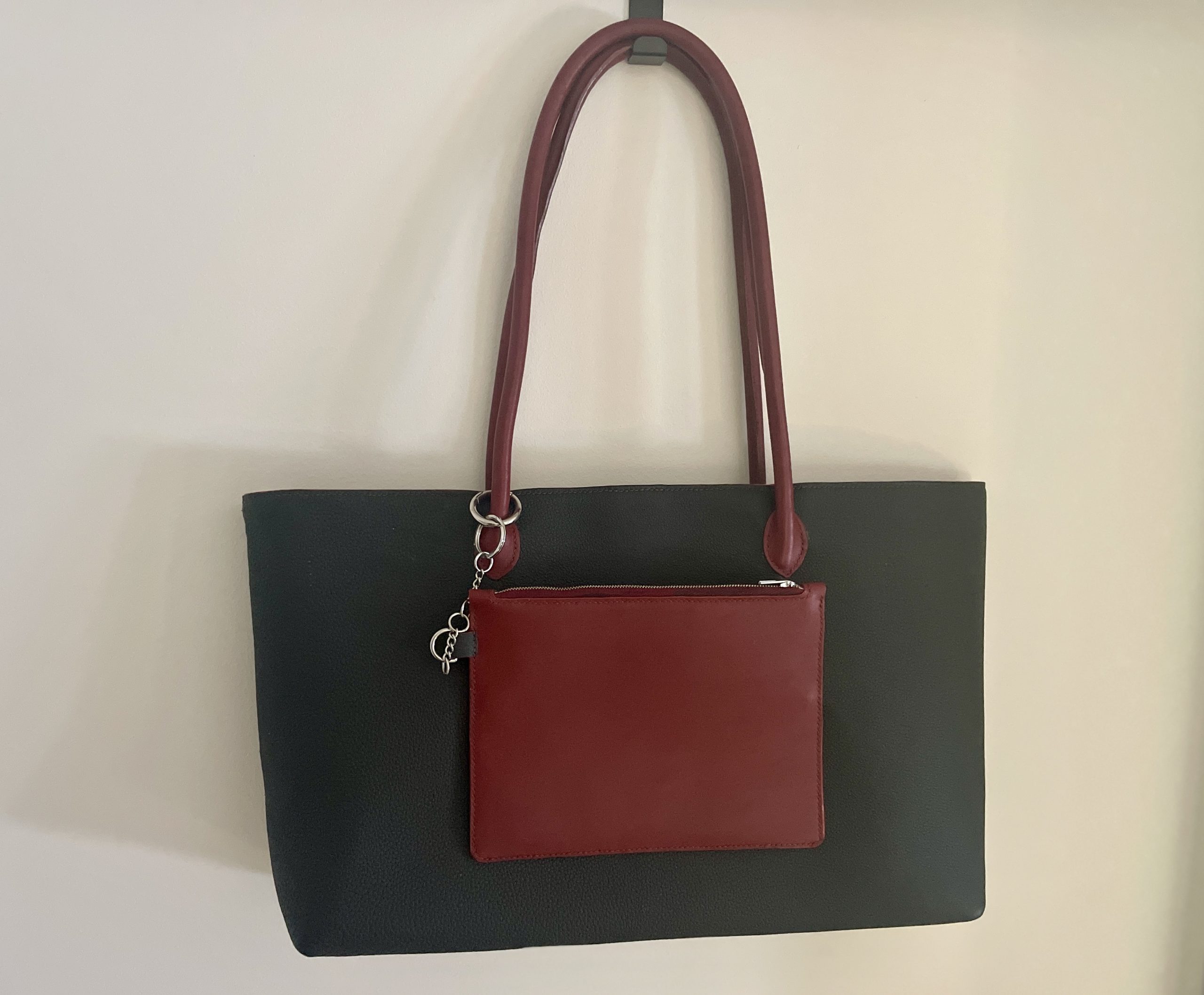
And here is the finished bag
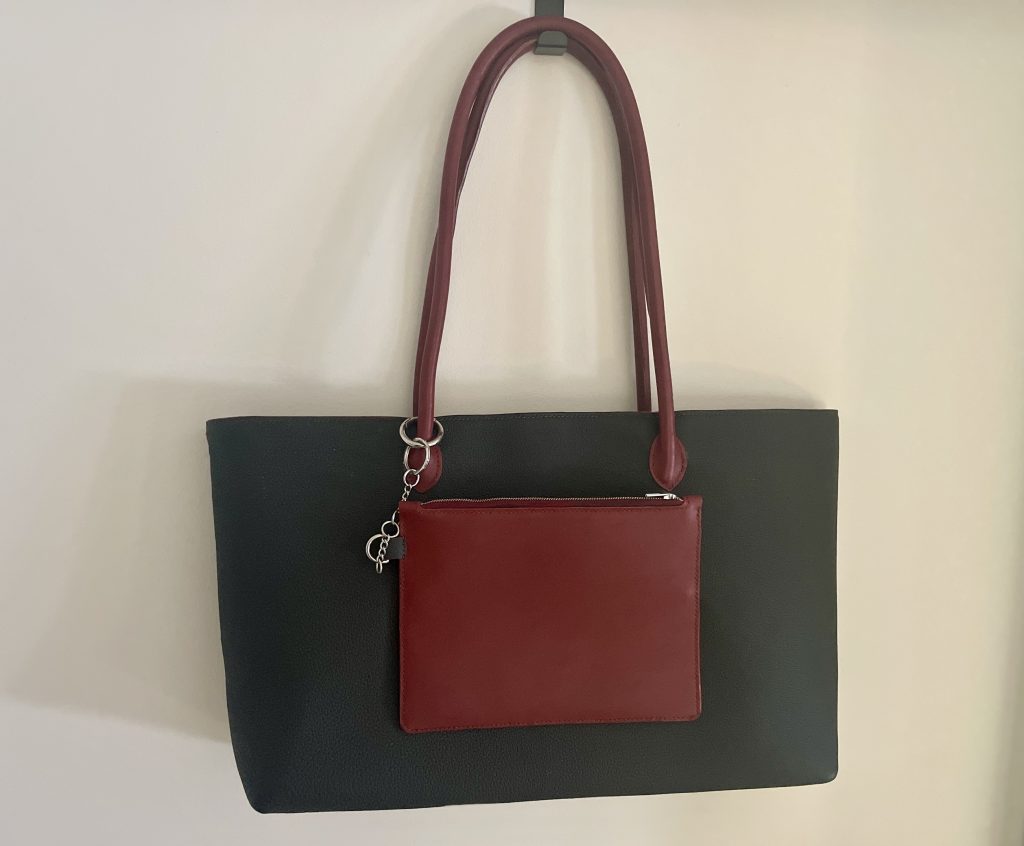
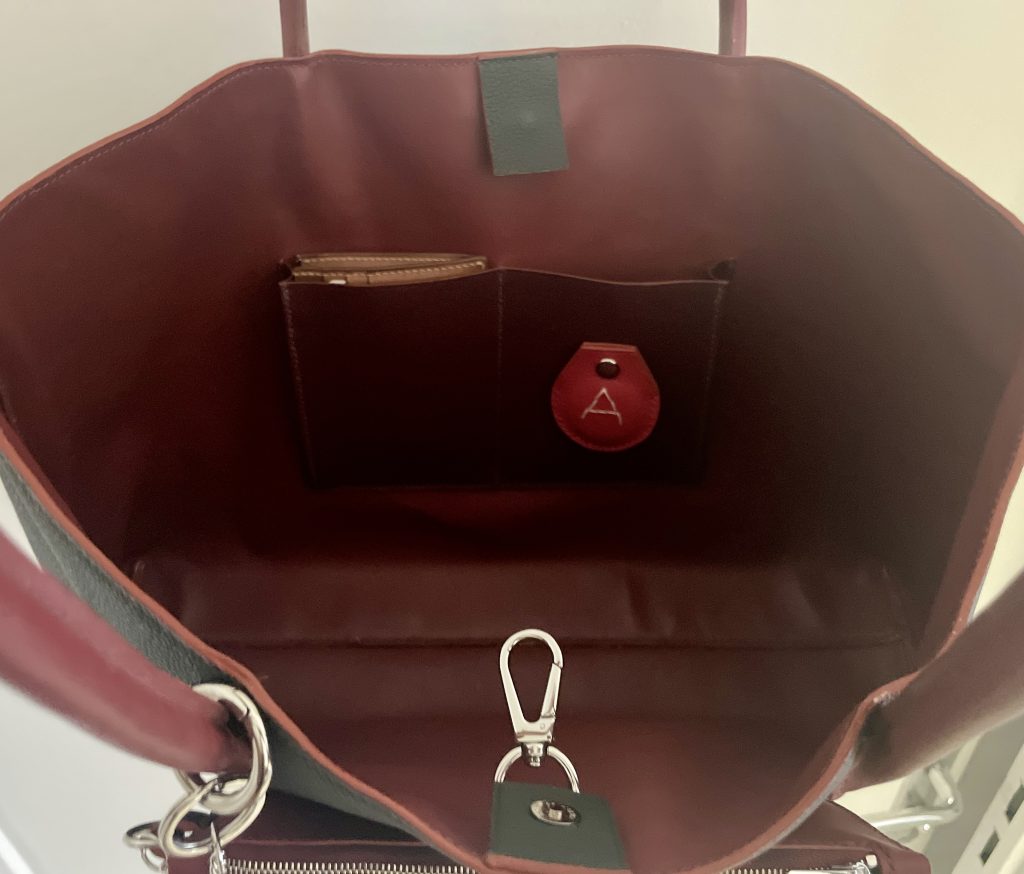
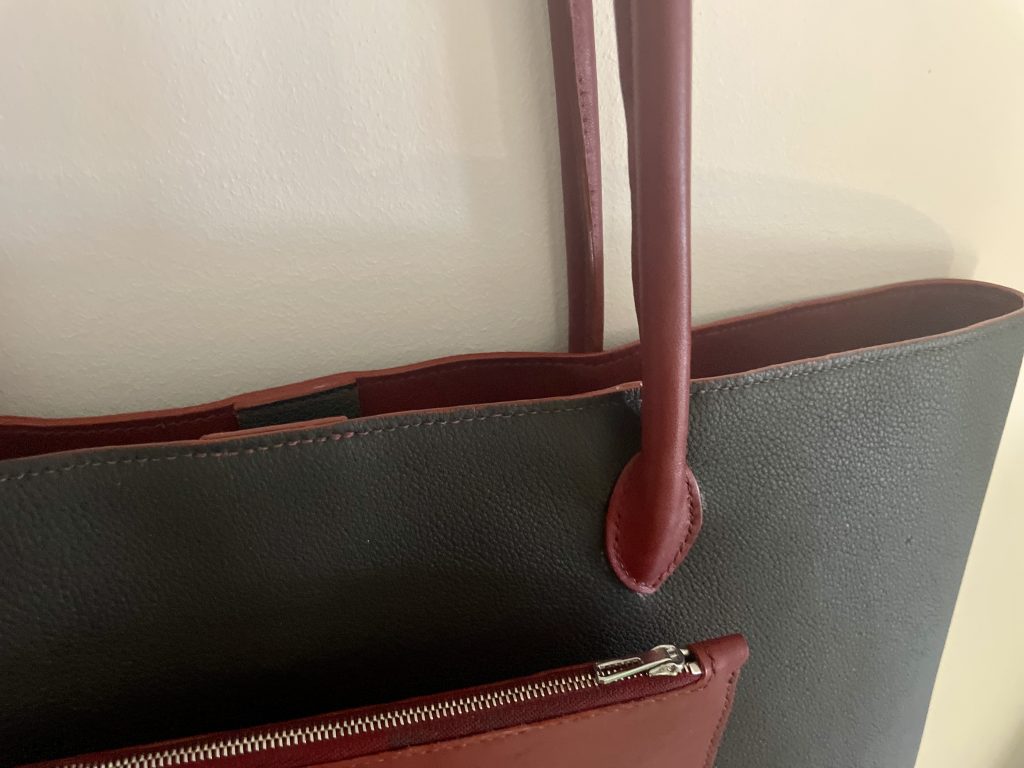
The outer leather ‘Odessa” comes from Weinheimer tanneries. It’s a very large upcycled offcut that I bought for €50. I then purchased the lining (calf leather) for an additional €50 (half a hide). I used 4 types of reinforcements to support the handles, the bottom of the bag, and the pouch. The zipper is from Riri; I really like this brand because the zip is secure and can be flattened so it doesn’t open accidentally. All metal parts are made of stainless steel. So I think all in all, the materials must have cost me around €200 + 35 hours of work + a very high number of hours spent on design.
I chose a burgundy thread to match the lining, and also to hide any imperfections (it’s been a while since I’ve done leatherwork, so my stitching is less neat than usual) — I decided not to use my usual cream-coloured thread, and the result looks really good, I think. You can still see the contrasting saddle stitch along the edge of the bag.
The bag was designed to be modular (rivets, press studs to easily replace the AirTag holder and the pouch), and I hope it will stand the test of time.
I took my tote bag grocery shopping and I’m extremely happy with its size and the comfort of the handles. Most industrial handles are made with plastic inside. The fact that I used a leather cord allows the handles to be incredibly supple and flexible. This creates a larger contact area, a softer feel, and my shoulder doesn’t ache — even though the empty bag is quite heavy — unlike bags with similar handles such as the Longchamp Le Pliage.
This post is also available in:
Français


